Are Protein Bars Good for You? What's Actually in a Clean One
Some are a reasonable snack and some are candy with extra protein. The difference is printed on the label.
Some are a reasonable snack and some are candy with extra protein. The difference is printed on the label.
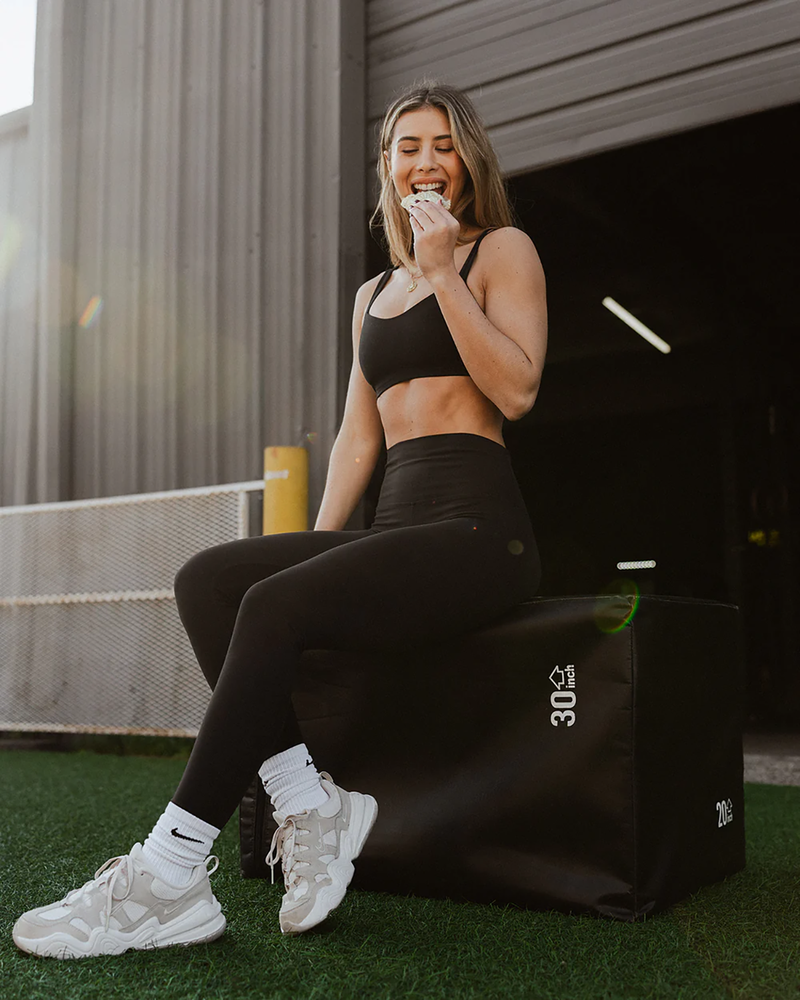
Some protein bars are a reasonable snack. Some are closer to a candy bar with added protein.[1]
The difference is on the Nutrition Facts panel and the ingredient list, not the front of the wrapper. “Clean” has no legal definition, so this guide turns it into three checks: what the bar leaves out, what protein it uses, and whether anyone tested it.
Promix makes the bar we use as the example, so we have an interest in the answer. Where the evidence cuts against our own bar, we say so, in sections 03 and 05.
A protein bar is only as good for you as its label: nearly all protein bars are ultra-processed, and some carry as much sugar and as many calories as a candy bar.[1]
That is the view of nutrition experts at Tufts University's Friedman School. It is the fairest one-line answer to whether protein bars are healthy, and it is not a verdict on every bar.
The difference comes from what goes in besides protein. Syrups, sweeteners and flavorings make concentrated protein taste like food, and three lines on the panel show how far a bar has gone.[1]
| Attribute | What Tufts suggests | Promix Vanilla bar, 40g |
|---|---|---|
| Added sugars | Fewer grams. Added sugars have their own line on the panel. | 3g |
| Calories | Over 200 a bar is likely too much for most snacking. | 150 |
| Saturated fat | As low as you can find. Some popular bars carry over a quarter of a day's limit. | 2.5g, 13 percent of the daily value |
Guidance from Tufts.[1] Promix figures from the product panels. Across the 13 whey flavors, added sugars run 3g to 5g and calories 140 to 160.[2]
Now the counterweight, and it applies to our bar too. Most US adults already get the protein they need: the Recommended Dietary Allowance is 0.8 grams per kilogram of body weight a day, and Tufts estimates most adults eat 1.0 to 1.5.[1] A bar is a convenience, not a requirement, and you can work out how much protein you need to build muscle.
“Clean” has no legal definition on a US food label, so a clean protein bar is whatever the brand or reviewer using the word says it is.
Across the full text of the federal food labeling rules, 21 CFR Part 101, the word appears four times. Every one describes clean oat or barley grain in the rules for a health claim.[3]
“Healthy” is the opposite case. FDA defined it in a final rule published December 27, 2024, which took effect April 28, 2025, with compliance due February 25, 2028.[4] Calling a bar healthy is a claim with rules attached, and calling it clean is not.
So any brand that uses the word owes you its definition. Here is ours, in four parts, each one published where you can check it.
| Attribute | What Promix publishes | Where you check it |
|---|---|---|
| What it leaves out | No Artificial Anything. The Vanilla bar is made without GMOs, xanthan gum, soy, gluten and stevia. | The Ingredients tab on each product page. |
| What goes in | Named sourcing. Grass-fed whey, vanilla sourced from Madagascar, and five organic ingredients, from the tapioca syrup to the coconut oil. | The Ingredients and Key Ingredients tabs. |
| How it is tested | Independent third-party labs, to published limits for heavy metals, gluten, soy, glyphosate and AMPA. Gluten is tested to under 5.0 ppm, against FDA's under 20 ppm. | The Testing tab, and section 06 below. |
| Where it is made | GMP certified facilities. The bar is kosher and made in a peanut free facility. | The Testing and Ingredients tabs. |
Read from the Promix Vanilla Protein Puff Bar product page, September 25, 2026. This is a brand's standard, not a legal one.[2]
Here is what our definition does not include. Clean at Promix is a free-from standard, not a whole-food one: the first ingredient is a whey protein puff made in a factory, which is why section 03 calls the bar ultra-processed. If you shop for clean protein bars by our standard, the Vanilla product page lists the full ingredients and the test limits.
Most protein bars are ultra-processed by the definition nutrition researchers use, because the NOVA system names whey protein and soy protein isolate among the ingredients that mark a food as ultra-processed.[5]
NOVA sorts foods by how they are made, not by their nutrients. Its list of markers includes “protein sources (hydrolysed proteins, soya protein isolate, gluten, casein, whey protein and ‘mechanically separated meat’)”.[5] By that standard, almost any bar built on a protein concentrate qualifies.
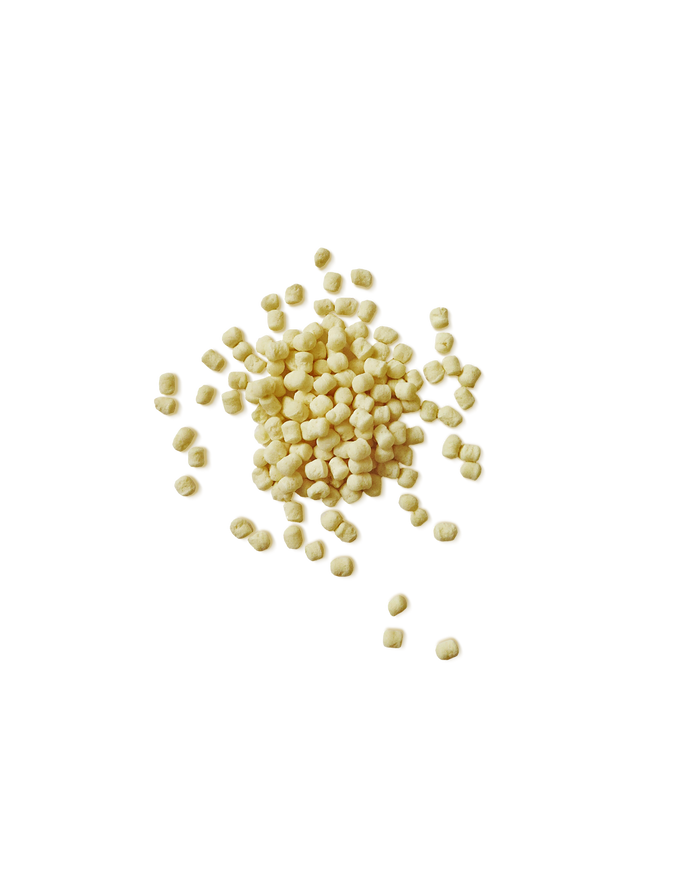
PROMIX Whey Protein Puffs: whey protein isolate, whey protein concentrate, tapioca starch, calcium carbonate and sunflower lecithin. By NOVA's list, this is what makes our bar ultra-processed.
Promix's bar is ultra-processed by the NOVA definition. Whey protein is on the list by name, and it is our first ingredient. Processed does not mean low quality, which is the next section, and we cover the two whey fractions in whey protein isolate versus concentrate.
What the label does not settle is what that means for you. The evidence comes from studies of whole diets, and Tufts says whether the foods themselves are the cause “has yet to be determined.”[1]
The system also has critics. A 2025 review argues that results differ by type of food, with some dairy products showing neutral results, and that NOVA does not account for nutrient content.[6] The US has no federal definition yet, and FDA and USDA asked for public input toward one in July 2025.[7]
In a 2025 laboratory test of four protein bars, the bar made only with milk proteins scored highest for protein quality, though the authors describe even that score as relatively low.[8]
The study, in Scientific Reports, pulled 1,641 bars from OpenFoodFacts, a consumer-built European database, and checked their protein content. It then scored protein quality on four bars, in a lab digestion model, not in people.[8]
The top scorer was built on whey protein concentrate and milk protein concentrate. It scored a DIAAS of 61 for adults, with 85.9 percent in vitro digestibility. DIAAS rates a protein on its amino acids and how much of them the body can take up.[8]
One bar mixed milk proteins with collagen and soy. The authors put the lower scores “most probably” down to proteins such as collagen, which is their inference, not a measured comparison.[8] We explain why collagen scores poorly in collagen protein versus whey protein.
One finding applies to our bar directly. The paper suggests a bar's other ingredients, fiber among them, may reduce how much protein is available. Promix's bar has added fiber, 5g of fiber in the Vanilla bar.[8]
Our puffs use whey that the product page describes as grass-fed. That is a sourcing fact, not a benefit, so if you are comparing grass fed protein bars, compare the panels too.[2] We cover what grass-fed does and does not change in grass-fed whey versus regular whey.
Sugar alcohols are sweeteners such as erythritol, maltitol, sorbitol and xylitol, and a US label only has to list them on their own line when the package makes a claim about sugar alcohols or sugars.[9]
Federal rules define them as sugar derivatives that FDA has listed or that are generally recognized as safe, and name mannitol, xylitol and sorbitol as examples. With no claim on the pack, the ingredient list is the only place to find them.[9]
They sweeten with fewer calories than sugar, but they are “slowly and incompletely absorbed” and fermented in the large intestine. That is why they “can also produce abdominal gas, bloating, and diarrhea in some individuals.”[10]
To find them, scan the ingredient list. FDA's examples are erythritol, hydrogenated starch hydrolysates, isomalt, lactitol, maltitol, mannitol, sorbitol and xylitol, and most end in “itol.”[10]
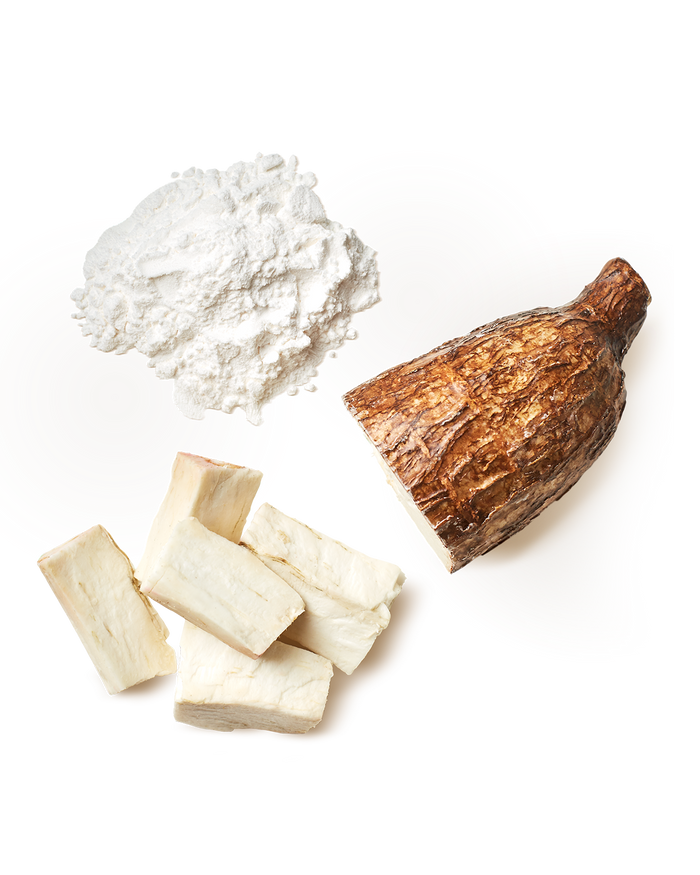
Tapioca, from the cassava root: starch in the puff, and organic syrup and fiber in the marshmallow binder.
Our Vanilla bar is sweetened with organic tapioca syrup and contains none of FDA's example sugar alcohols. It does contain glycerin, as do all 19 bars in the line.[2]
Glycerin is a polyol, the chemical family sugar alcohols belong to, but FDA's definition does not name it and its examples leave it out. We found no FDA statement either way, so we make no sugar alcohol claim about our bar.[10]
Our bar also contains organic inulin, a prebiotic fiber, which we cover in prebiotic vs probiotic for bloating.
A free-from label says nothing about contaminants: in Clean Label Project's 2025 test of 165 snack and nutrition bars, 20 of the 35 soy free bars were over California's Prop 65 lead level.[11]
Heavy metals come in with soil and raw ingredients rather than with the recipe, so they never appear on an ingredient list. A bar can be soy free, non-GMO and organic and still carry them. Only a test shows it.
| Claim on the bar | Bars tested | Over the lead level |
|---|---|---|
| Soy free | 35 | 20, 57% |
| Dairy free | 57 | 30, 53% |
| Vegan | 53 | 23, 43% |
| Organic | 51 | 19, 37% |
| Non-GMO | 92 | 34, 37% |
| Gluten free | 98 | 31, 32% |
Clean Label Project, 165 top-selling snack and nutrition bars, published May 27, 2025. A bar can carry more than one claim, so the rows overlap. Not peer reviewed. Promix is not in the study.[11]
Read the table with its limits. Clean Label Project published on its own site rather than in a peer-reviewed journal, and it runs a paid certification program for brands.[11] Prop 65 is a warning rule: above 0.5 micrograms of lead a day, a product sold in California must carry a warning, which is not by itself a finding that it is unsafe under federal rules.[12]
Promix posts a Prop 65 lead warning on its own site for its chocolate products, linked from their product pages. We are telling you because this section counts other bars over that same level.[13]
Heavy metals are tested by ICP mass spectrometry, to under 5.00 ppb for lead and mercury and under 10.0 ppb for cadmium and arsenic. Gluten is tested to under 5.0 ppm, against FDA's under 20 ppm for a gluten free claim, and soy to under 2.5 ppm. Glyphosate and AMPA are tested too.[2]
These are limits, not batch results, and Promix does not publish per-batch results on the site. A 40g bar at the lead limit would carry under 0.2 micrograms of lead, which is arithmetic on a specification, not a measurement. The lot lookup confirms your lot and shows the specification it is tested against.[14]
If you are shopping for soy free protein bars or protein bars without soy, a published soy limit tells you more than a claim on the front. Our walkthrough covers how to check if a supplement is third party tested.
Independent lab testing
Heavy metals, gluten, soy, glyphosate and AMPA. These are specifications, not batch results.

A clean protein bar is easiest to judge by what its ingredient list leaves out, and US labels list ingredients in descending order by weight, so the first few tell you what the bar mostly is.[15]
That ordering rule is federal. Five checks cover most of what people mean by protein bars with clean ingredients, and here is our Vanilla bar run through them.
| Attribute | What to look for | Promix Vanilla bar |
|---|---|---|
| 1. Sweeteners and colors | Artificial ones are named on the list, and so are sugar alcohols. | None artificial, and none of FDA's example sugar alcohols. Contains glycerin, section 05. |
| 2. Gums and thickeners | Named on the list, such as xanthan gum or guar gum. | No xanthan gum. Contains agar, a seaweed-based gelling agent that sets the marshmallow. |
| 3. Added sugars | Their own line on the panel. Then find where the syrups sit on the list. | 3g. Organic tapioca syrup is the sweetener. |
| 4. Fats | Oils are named, so this is the check for protein bars without seed oils. Saturated fat is on the panel. | Organic coconut oil is the only added fat, 2.5g saturated. The puff contains sunflower lecithin, an emulsifier from sunflower seeds. |
| 5. What it cannot tell you | Processing and contaminants are on no ingredient list. | Ultra-processed by NOVA, section 03. Tested to published limits, section 06. |
Contains egg and milk. Made in a peanut free facility. Across the whey line saturated fat runs 1.5g to 4.0g. Several other flavors, including every plant bar, also use palm kernel oil, so check the flavor you buy.[2]
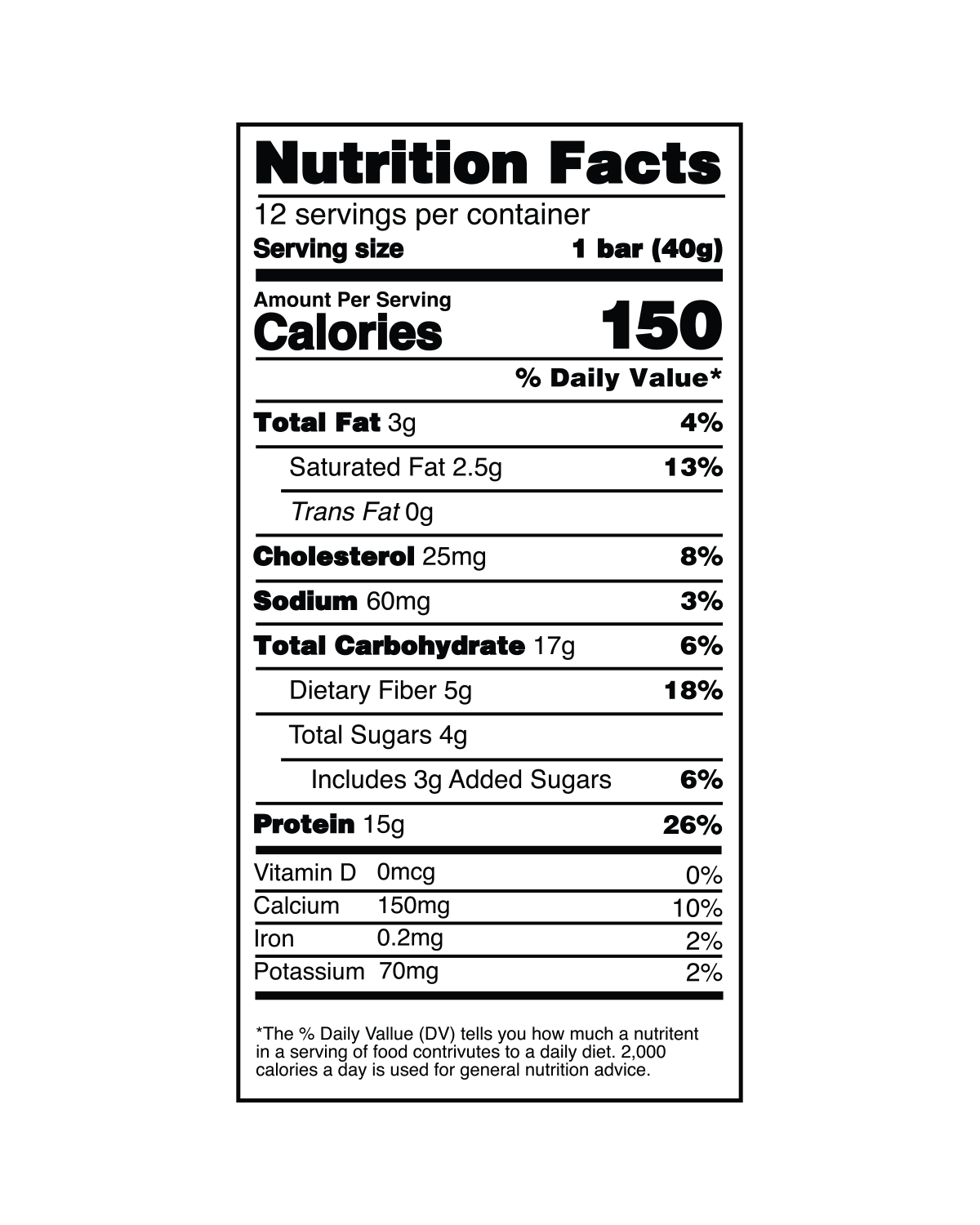
The lines the checks read: added sugars 3g, saturated fat 2.5g, fiber 5g, protein 15g. Promix Vanilla Protein Puff Bar, read September 25, 2026.
The full ingredient list, with Promix's organic markers written out. PROMIX Whey Protein Puffs (whey protein isolate, whey protein concentrate, tapioca starch, calcium carbonate, sunflower lecithin), marshmallow (organic tapioca syrup, organic tapioca fiber, glycerin, filtered water, organic inulin, organic vanilla extract, agar, egg whites, sea salt), organic coconut oil.[2]
We are not making a seed oil claim either way, and we are not going to tell you seed oils are harmful. Our standard is No Artificial Anything, and the panel is where you hold us to it.
Read the label, then decide
14g to 16g of protein and 3g to 5g of added sugars across 13 whey flavors. Start with Vanilla.
Contains egg and milk. Made in a peanut free facility.
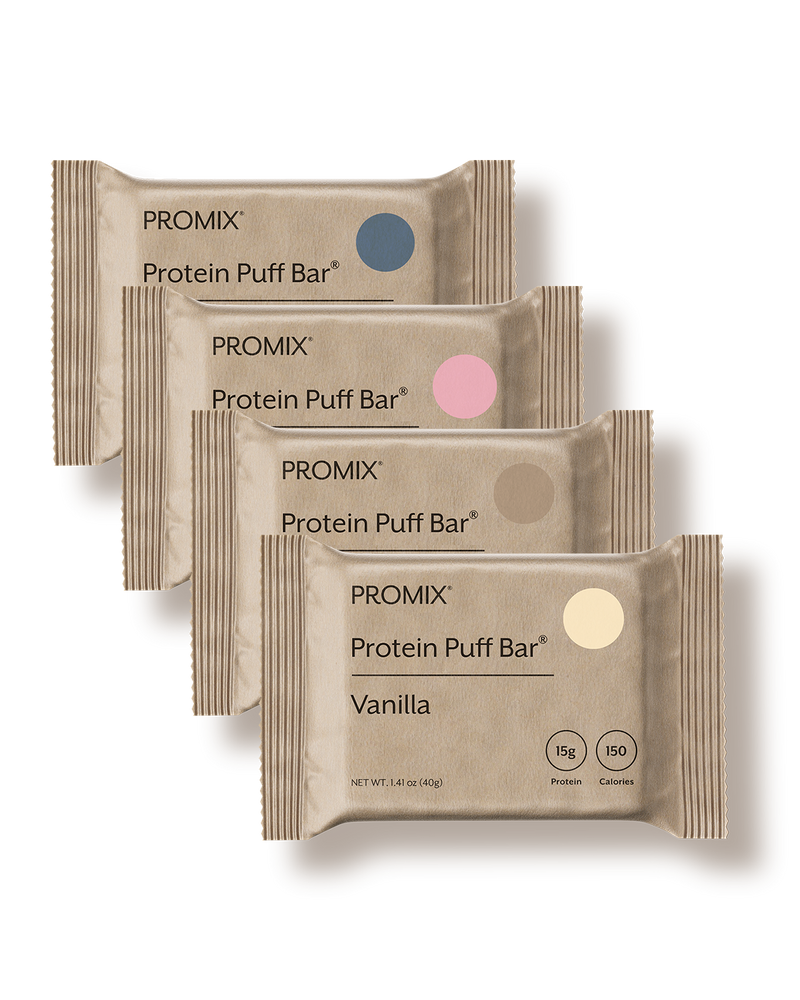
A protein bar is a packaged snack built around a concentrated protein source and held together with syrups, fibers or fats. The most common proteins come from dairy, whey or casein, and soy concentrate or isolate are also common. In a 2025 analysis of 1,641 bars in a European food database, soy protein isolate was the single most common primary protein, in 22 percent of them. Egg whites, nuts, pea and rice protein also show up. The ingredient list tells you which one a bar is built on, because the first ingredient is the one there is most of.
It depends on the bar, so read the panel, where protein is listed in grams per serving. A 40 gram Promix Vanilla Protein Puff Bar has 15 grams. The 13 whey flavors run 14 to 16 grams, the plant bars have 11 grams, and the 100 gram Giant has 39 grams. Before chasing a bigger number, it is worth knowing that most US adults already eat more protein than the Recommended Dietary Allowance of 0.8 grams per kilogram of body weight a day.
It varies widely from bar to bar, which is why the calorie line is worth reading first. Tufts nutrition experts suggest that over 200 calories a bar is likely too much for most snacking, depending on your needs and whether the bar is a snack or a meal. A Promix Vanilla Protein Puff Bar is 150 calories, and the 13 whey flavors run 140 to 160. The 100 gram Giant is 370, which puts it in meal territory rather than snack territory.
Convenience. A protein bar is a way to get protein when a meal is not practical, on a training day, while traveling or between meals. Promix describes its own bar as an on-the-go protein packed snack anytime of day, before or after training. It is not something most people need, since most US adults already get enough protein, and Tufts notes natural protein sources are usually the better choice. Treat a bar like any other snack and read the panel before you pick one.
Every bar with calories provides energy, because calories are a measure of energy. What differs is where the calories come from. A protein bar is built around protein rather than carbohydrate, so it is not the same thing as a bar designed as fuel for a long session. A Promix Vanilla Protein Puff Bar has 150 calories, with 17 grams of carbohydrate and 15 grams of protein. If quick fuel is what you are after, the carbohydrate line tells you more than the protein line does.
We can only speak to our own. On September 25, 2026, a 12 pack of Promix Vanilla Protein Puff Bars was 39 dollars, which is 3.25 dollars a bar, or 2.93 dollars a bar on subscription. What the price buys, in things you can check, is whey protein isolate and concentrate puffs, organic tapioca, organic coconut oil and organic Madagascar vanilla, in a bar whose testing limits are published. Compare prices per gram of protein rather than per bar, and read what each one is built on.
The research is on fiber rather than on protein bars. A 2022 review of 16 trials in 1,251 adults found fiber supplements helped with constipation, mainly above 10 grams a day for at least four weeks. One Promix Vanilla bar has 5 grams of fiber in total, so we are not going to suggest the bar does anything for it. Added fibers can also cause gas. In a 2010 study of 26 healthy adults, 5 and 10 grams of chicory inulin a day tended to mildly increase digestive symptoms, most often gas. Our bar contains organic inulin, and Promix does not publish how much, so we cannot tell you the dose.
Not automatically, because clean and healthy mean different things on a US label. Healthy is a defined claim under an FDA rule published in December 2024, with a compliance date of February 2028. Clean has no definition at all. A bar sold as clean can still be ultra-processed, or high in added sugars or saturated fat. Judge it on the Nutrition Facts panel and the ingredient list, not the word on the wrapper. We do not describe our own bar as healthy.
Tufts Health and Nutrition Letter, Friedman School of Nutrition Science and Policy. Protein Bars: Healthy Snack or Ultra-Processed? Tufts Now, January 29, 2026. now.tufts.edu
Expert guidance from a nutrition school, not a study. Read in full September 24, 2026.
Promix Nutrition. Vanilla Whey Protein Puff Bars: Nutrition Facts, Ingredients, Key Ingredients and Testing panels. promixnutrition.com
Read from the live product page September 24, 2026, and re-verified September 25, 2026. All 13 whey flavors, the four plant bars and both Giants were re-read on September 25.
Code of Federal Regulations, Title 21, Part 101, Food Labeling. Electronic Code of Federal Regulations. www.ecfr.gov
Full text searched September 24, 2026, as current on eCFR at September 22, 2026.
US Food and Drug Administration. Food Labeling: Nutrient Content Claims; Definition of Term “Healthy.” Final rule. Federal Register 89 FR 106064, December 27, 2024. Effective date delayed to April 28, 2025, by 90 FR 10592. www.federalregister.gov
The definition is now 21 CFR 101.65(d). Compliance date February 25, 2028.
Monteiro CA, Cannon G, Levy RB, et al. Ultra-processed foods: what they are and how to identify them. Public Health Nutr. 2019;22(5):936-941. doi.org
The paper that sets out the NOVA classification. Read at the publisher.
Louie JCY. Are all ultra-processed foods bad? A critical review of the NOVA classification system. Proc Nutr Soc. 2025:1-9. doi.org
A narrative review by a single author. No external funding and no conflicts declared.
US Food and Drug Administration and US Department of Agriculture. Ultra-Processed Foods; Request for Information. Federal Register 90 FR 35305, July 25, 2025. Comment period extended September 19, 2025. www.federalregister.gov
A request for comment toward a definition, not a definition. Nothing final as of September 25, 2026.
Tormási J, Benes E, Kónya ÉL, Berki M, Abrankó L. Evaluation of protein quantity and protein nutritional quality of protein bars with different protein sources. Sci Rep. 2025;15:9388. doi.org
Protein quality was measured on four bars, in a laboratory digestion model, not in people. The 1,641 bars were analyzed for protein content only. The paper reports the top score's limiting amino acid differently in its abstract and its results; figures here are from the results. Funded by the authors' university, no competing interests.
Code of Federal Regulations. 21 CFR 101.9(c)(6)(iv), Sugar alcohol. www.ecfr.gov
Read September 24, 2026.
US Food and Drug Administration. Interactive Nutrition Facts Label: Sugar Alcohols. October 2021. www.accessdata.fda.gov
FDA consumer education sheet. Its list of example sugar alcohols does not include glycerin.
Clean Label Project. Industrial Contaminants Detected Across 165 Top-Selling Snack and Nutrition Bars. May 27, 2025. cleanlabelproject.org
Published on its own site, not peer reviewed. Clean Label Project is a nonprofit that also runs a paid certification program for brands. Promix is not one of the 165 bars.
California Office of Environmental Health Hazard Assessment. Lead, Proposition 65 chemical listing. oehha.ca.gov
Maximum Allowable Dose Level 0.5 micrograms a day, for the reproductive listing. Read September 24, 2026.
Promix Nutrition. Prop 65 Warning. promixnutrition.com
Read September 25, 2026. Linked from the product pages as “California Residents: Learn about Prop 65 Warning.” Scope (chocolate products) confirmed by Promix, October 8, 2026.
Promix Nutrition. Independent Lab Test Results. promixnutrition.com
Read September 25, 2026. The lookup confirms a lot code and shows the testing specification. It does not show per-batch results.
Code of Federal Regulations. 21 CFR 101.4(a)(1), designation of ingredients. www.ecfr.gov
Read September 24, 2026.
van der Schoot A, Drysdale C, Whelan K, Dimidi E. The effect of fiber supplementation on chronic constipation in adults: an updated systematic review and meta-analysis of randomized controlled trials. Am J Clin Nutr. 2022;116(4):953-969. doi.org
Cited in FAQ 7. 16 trials, 1,251 adults. Read as the abstract. The Almond Board of California is among its funders.
Bonnema AL, Kolberg LW, Thomas W, Slavin JL. Gastrointestinal tolerance of chicory inulin products. J Am Diet Assoc. 2010;110(6):865-868. doi.org
Cited in FAQ 7. 26 healthy adults. Read as the abstract. Funded by Cargill, an inulin supplier. Used for tolerance data only.
Promix product facts read from the live product pages and verified September 25, 2026. Nutrition Facts, Ingredients, Key Ingredients and Testing panels read the same day.

Detox Flush contains Niacin and WILL cause flushing and tingling. This is NORMAL.
DO NOT purchase Detox Flush if you are not comfortable with flushing and tingling.
DO NOT take a full serving your first time using Detox Flush. Take a 1/4 serving to understand how the tingling and flushing will feel.
For use ONLY by healthy individuals over 18 years old. Do not take if you are pregnant or nursing.