


































Prebiotic vs Probiotic for Bloating: What Actually Helps?
What each one does, what the evidence supports, and what we refuse to add.
What each one does, what the evidence supports, and what we refuse to add.

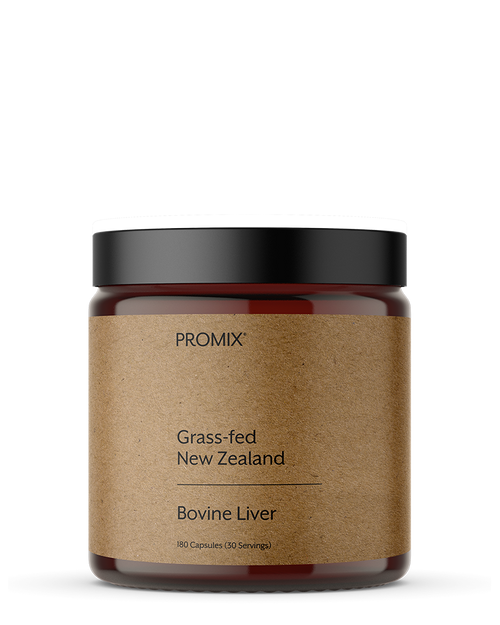
The prebiotic and the product in one frame. Baobab is the fiber Debloat is built on. Photographed by Promix, read from promixnutrition.com on September 10, 2026.
A fiber your own gut bacteria ferment. You are not adding anything living, you are feeding what is already there.
Feeds the bacteria you have
Live bacteria you swallow, counted in CFUs. What they do depends on the specific strain, not on the species name.
Adds bacteria to the mix
Neither one is a treatment for bloating. Which of them matters depends on what is causing yours.
A probiotic is live bacteria you swallow. A prebiotic is the fiber that feeds the bacteria already living in you. They are not competing options, they do different jobs, and for bloating the more useful question is not which one to pick but whether either is aimed at what is actually causing yours. The probiotic trials that reduced gas and bloating did it with specific strains, in small short studies, and the strain matters more than the species. Most of the other ingredients marketed for bloating have thinner evidence than their marketing suggests, and one of them has none we could find. If your bloating is new, constant, painful, or comes with weight loss or blood, that is a question for a clinician and not for an ingredient list.
A probiotic is live bacteria you swallow. A prebiotic is fiber that feeds the bacteria already living in you. One is the seed. The other is the soil.
The words look alike, which is most of why they get confused. They describe two different things doing two different jobs, and neither one is an upgrade on the other.
A probiotic adds microorganisms. The count on the label is CFUs, colony forming units, and it tells you how many live organisms are in a serving. What those organisms actually do depends on which ones they are, in a way that matters more than most labels admit. Results in the research belong to specific, named strains at specific doses. A product that names only a species is not evidence that its particular strain does the same thing.
A prebiotic adds nothing living. It is a fiber your own gut bacteria ferment, and the point of it is to feed a population you already have rather than to introduce a new one. That fermentation is normal. It is also, in larger or sudden amounts, where gas comes from, which is why the dose matters.
Live organisms, counted in CFUs. Strain specific. Works over weeks, not on the day you take it.
The seed
A fermentable fiber. Nothing living in it. Feeds the population already in your gut.
The soil
Put plainly: prebiotics and probiotics are not competing options you have to choose between. They are two halves of the same mechanism, and the more useful question is not which one to buy but whether either is aimed at what is actually causing your bloating.
A prebiotic is a fiber your gut bacteria ferment. You are not adding anything living. You are feeding what is already there.
Prebiotic supplements have grown into their own category, and the labels rarely explain the basic thing: a prebiotic is food. Specifically it is a fiber your own body cannot digest, which passes through to the bacteria further down, which ferment it.
Promix Debloat uses wild organic African baobab as its prebiotic. There is 2.6 g of it per serving, delivering 1 g of fiber.
One caveat we owe you here, because the next section spends a lot of words demanding strain-level proof from probiotics. Not every fiber is a prebiotic. The word means a fiber shown to feed beneficial bacteria selectively, and that is a higher bar than simply being fermentable. For baobab specifically, most of the work behind the prebiotic label is laboratory and animal research rather than human trials. Baobab is a genuine fermentable fiber and it is food for the bacteria already in you. Calling it a proven human prebiotic would be holding our own ingredient to a softer standard than we just held everyone else's. That is our read of the evidence, not a finding we can hand you a trial for.

Baobab, as Promix photographs it. The fruit and the powder milled from it. One serving of Debloat carries 2.6 g.
Both, and the difference is dose and adaptation. A large or sudden increase in fermentable fiber produces gas while your gut adjusts to it. A small, steady amount is what feeds the bacteria without overwhelming the system. That is the whole reason a prebiotic dose is measured in grams rather than handfuls, and it is why adding a fiber supplement on top of an already high fiber diet can make you feel worse before it makes you feel better.
If your bloating started when you started eating more fiber, that is worth knowing before you add another source of it.
Specific probiotic strains have reduced gas and bloating scores against placebo in small, short trials. The result belongs to the strain that was tested, not to probiotics as a category.
This is the section where a supplement brand is supposed to tell you the category works. Here is the more useful version.
Trials of Bacillus coagulans in adults with functional gas and bloating have reported improvement against placebo over four weeks, the larger of them in 70 adults. Those are real results in real trials. They are also small, short, and tied to named strains, and the paper reporting one of them says in its own introduction that probiotic strains of the same species show strain specific and disease specific activity. Which means a product naming the species is telling you less than it appears to.
The smaller of the two trials is worth reading closely, because it argues against itself. In 61 adults it improved abdominal pain and the overall symptom score against placebo, but its bloating and distension measure fell short of statistical significance, and its authors write that a strong placebo effect was evident and could explain the lack of significant differences across many of their measures. That is a supporting study telling you to discount it. We would rather quote that than bury it.
One more thing about both of them, and it is the kind of thing usually left out. Each trial is tied to the company that sells the strain it tested. The larger one was run with the clinical research team of the group that markets its strain, and the smaller one states plainly that its authors were funded by the company selling theirs. That is ordinary in supplement research and it is not a reason to throw either result away. It is a reason to weigh them the way you would weigh any result a seller paid for. Neither strain is in Debloat, so we have nothing riding on this, which is exactly why we can say it.
Two things belong here that most brand pages leave out.
The first is the position of the American Gastroenterological Association. Its 2023 clinical practice update sets out fifteen pieces of best practice advice, and number 10 reads, in full: "Probiotics should not be used to treat abdominal bloating and distention." We are quoting it rather than paraphrasing it, because a paraphrase would have come out softer than what the AGA actually wrote. That is a statement about treating a clinical symptom in a medical setting. It is not the same thing as a structure and function statement about reducing occasional bloating. But it is the position of the field's main body on this exact question, and you should know it before you spend money.
The second is how large the placebo response is in bloating trials. In a meta-analysis of ten randomized trials, a prescription antibiotic improved bloating in 44.6% of patients against 34.6% on placebo. That comparison covers 2,401 patients. Read that second number again. More than a third of people improved on placebo alone. That is the benchmark any supplement result has to be read against, including ours.

The probiotic blend in Debloat, as Promix photographs it. Three Bacillus species, 5 billion CFUs at the time of manufacture.
Bloating is a symptom with many causes, and no treatment for it works consistently for everyone. A published review of chronic distension and bloating puts it plainly: no regimen has been consistently successful.
Because feeding bacteria and adding bacteria are two different jobs, and doing one without the other leaves half the mechanism unused.
Promix Debloat is a prebiotic and a probiotic in the same serving. Here is what is in it and why.
| Per serving | The probiotic | The prebiotic |
|---|---|---|
| How much | 5 billion CFU, at manufacture | 2.6 g of baobab |
| What it is | Three Bacillus species: coagulans, subtilis and clausii | Wild organic African baobab |
| What it delivers | Live organisms, added to your gut | 1 g of fiber, food for the bacteria already there |
| Storage | Spore-forming, so shelf stable with no refrigeration | Shelf stable |
| What the label does not give you | Strain designations, and a count guaranteed past the date of manufacture | Nothing missing |
Source: Promix Debloat Supplement Facts panel, verified August 22, 2026 and re-verified September 4, 2026.
All three species are spore-forming. That is a real, checkable explanation for something the product page claims: it is shelf stable and needs no refrigeration. Spore-forming organisms survive storage in a way that many other probiotic species do not, which is why the product can sit in a drawer rather than a fridge.
The formula has been through a triple-blind, placebo-controlled, IRB-approved study over twelve weeks. Promix states that on the product page. We are telling you it exists rather than quoting numbers from it, because the study itself is not published anywhere you could go and read.
What we will not tell you is that this combination is the answer to your bloating. Read what the evidence shows again. The honest ceiling on any product in this category is that it may help, depending on what is causing your symptom, and that the placebo response in this area is large enough to be worth respecting.
 See what is in Debloat
If you have to choose one, choose based on what you are trying to change. Neither is better than the other in general.
The honest sort:
For most people the pairing matters more than the choice, which is why products increasingly combine them. But if you are taking either one and nothing has changed after a month of consistent daily use, the answer is probably not a different brand of the same thing. It is that the cause of your bloating is somewhere else.
Read the label for four things. Most products, including ours, fail at least one of them.
A species name like Bacillus coagulans tells you very little. The trials that reported results used named strains, and a result belongs to the strain that was tested. If a label gives you only a species, you cannot check it against any study.
Live cultures die over time. A count measured at manufacture and a count guaranteed at expiry are different promises, and only one of them tells you what you are getting when you actually take it.
Some strains need cold storage. Spore-forming strains generally do not. Neither is better on its own, but a refrigerated product that lives in your gym bag is not being stored the way it was designed for.
A badge on a label is a claim. A certificate you can look up is evidence. This is the same check we walk through in detail for any supplement.

Where Promix Debloat stands on its own four checks. It passes two of them.
It is shelf stable, which the panel states plainly, and that suits how most people actually store a supplement. And it is third-party tested. Check 4 above says a badge is a claim and a certificate you can look up is evidence, so here is the honest state of ours: Promix publishes batch lab results you can look up by lot code, and we have asked whether Debloat's lots are in that system. Until we can confirm they are, treat our own third-party line as a claim, exactly as check 4 tells you to.
It fails the other two, and you can see both on the label above. The panel names three species and no strains, so there is no way to match what is in the jar to a specific published result. And the 5 billion CFU figure carries a dagger reading at the time of manufacture, which means it is not a guarantee of what is alive when you actually take it. How long the jar has been sitting matters, and the label does not tell you by how much.
We would rather you read that off our own panel than take our word for it, which is why it is printed above. We have asked Promix to publish strain designations and a through-shelf-life count. Until they do, those are two gaps in our own label, and you should weigh them exactly as you would weigh them on anyone else's.
A brand that only tells you the checks its own product passes is selling, not explaining.
Not directly, and the evidence people are thinking of is about constipation rather than bloating. Promix sells magnesium. It is deliberately not in Debloat.
Magnesium comes up constantly in bloating conversations, so it is worth separating what the research actually shows from what the internet has made of it.
The magnesium trial people are usually reaching for tested magnesium oxide in chronic constipation. In a randomized, double-blind, placebo-controlled study, 34 Japanese women with mild to moderate constipation were assigned magnesium oxide or placebo three times daily for four weeks. One withdrew, so 33 were analyzed, and of those 33, 70.6% on magnesium met the primary endpoint against 25.0% on placebo. It also improved stool form and colonic transit time. In the same trial it did not significantly improve complete spontaneous bowel movement rates.
Three things about that result deserve stating plainly. It is 33 people. They were all women, and all of them Japanese. And the outcome measured was constipation, not bloating.
Magnesium salts of this kind work as osmotic laxatives, drawing water into the bowel and speeding transit. In eight healthy volunteers, magnesium sulphate measurably accelerated transit through the small intestine. That is the mechanism behind the constipation result, and it is also why people associate magnesium with feeling lighter. If constipation is what is driving your bloating, relieving the constipation may well change how you feel. That is an indirect route, and it is a conversation to have with a clinician rather than a reason to start taking a laxative daily.
Promix Relax is magnesium bisglycinate with organic lemon balm, and it is sold for sleep and muscle relaxation. It carries no bloating claim, because we do not have grounds for one. Bisglycinate is a chelated form chosen to be gentle on digestion, which is close to the opposite of what an osmotic laxative is doing. That last comparison is our reasoning from how the two forms are used, not a finding from a trial that put them side by side.
A randomized placebo-controlled trial of magnesium bisglycinate in 155 adults reporting poor sleep found a statistically significant improvement in insomnia severity, with a small effect size that the authors themselves describe as a modest benefit. We would rather tell you that than round it up.

So: we sell magnesium, and we did not put it in the bloating product. Different form, different job. If you want magnesium for sleep, that is what Relax is for. If you want it for bloating, the honest answer is that the evidence is about constipation, in a different form, in 33 people.
Peppermint oil has the strongest trial record of the group, and we do not sell it. Ginger has a measurable effect that did not change how people felt. Enzymes work on one specific problem. Vitamins have nothing behind them here.
These four come up in every search about bloating ingredients. Debloat contains none of the first three. It does contain vitamin C, which is on the panel above and is there for the reasons vitamin C is usually there, not for your bloating. Here is what the research says on all four.
Of everything in this section, peppermint oil has the best evidence. A systematic review of nine randomized trials in 726 patients concluded that peppermint oil is a safe and effective short-term treatment for irritable bowel syndrome.
Two caveats that matter more than the headline. Every trial in that literature was run in people diagnosed with IBS, and nearly all of them used enteric-coated capsules designed to release past the stomach. That is a specific population taking a specific preparation under a diagnosis. It is not evidence about occasional bloating in someone who has never been assessed, and IBS is something a clinician diagnoses and manages, not something a supplement addresses. If you think that describes you, that is a conversation to have with a doctor.
Ginger is the most interesting entry here, because of what its trial found and what it did not. In eleven people with functional dyspepsia, ginger measurably sped up stomach emptying: a median half-emptying time of 12.3 minutes against 16.1 minutes on placebo. There was a trend toward more antral contractions.
And in the same eleven people, the authors reported no impact on gastrointestinal symptoms.
That is the single most useful thing in this whole article. A measurable physiological change is not the same as feeling better. An ingredient can do something real inside you and still not fix the thing you actually noticed, and any brand that shows you a mechanism without showing you the symptom result is showing you half a study.
Enzymes address a specific undigested substrate. That is why lactase helps a lactose problem and does nothing at all for bloating with a different cause. If dairy is your trigger, an enzyme aimed at lactose is a reasonable and targeted thing to try. If dairy is not your trigger, it has nothing to act on. We cover the lactose question in detail in our guide to whey protein and lactose.
We looked for a trial of any vitamin using bloating as an endpoint and did not find one. Debloat does contain vitamin C, and you will not find a bloating claim attached to it anywhere on this page, because there is nothing to base one on. Promix sells vitamin C on its own too, along with D3 with K2, B12 and iron, and none of those carries a bloating claim either. The absence is the answer.

When it is new, persistent, painful, or arrives with weight loss, blood, vomiting or a change in your bowel habits, no ingredient on this page is the answer and a clinician is.
Everything above assumes ordinary, occasional bloating in someone who is otherwise well. That covers most people most of the time. It does not cover everyone.
See a clinician if your bloating is new and will not settle, if it is painful, if it wakes you at night, or if it arrives alongside unexplained weight loss, blood, persistent vomiting, or a lasting change in your bowel habits. Those are not supplement questions and no amount of reading about ingredients will resolve them.
And if your bloating tracks reliably to one thing you eat, the useful next step is identifying it rather than buying something to take alongside it. Protein powder is a common and often overlooked culprit, which we cover in why protein powder makes you bloated.
The label on Promix Debloat says to mix one serving, either a scoop from the jar or one stick packet, with 12 to 20 oz of water and, for best results, drink it in the morning on an empty stomach. That is the brand's own instruction rather than a general rule for every probiotic. Products differ, and the label on the product you own is the instruction that matters. If a product does not tell you, morning on an empty stomach is a reasonable default, and taking it at the same time each day matters more than the hour you pick.
Sometimes, and it depends on the strain rather than on probiotics as a category. Trials of specific Bacillus coagulans strains in adults with functional gas and bloating reported improvement against placebo over four weeks. Those results belong to the strains that were tested, at the doses that were tested, and a product naming only a species is not evidence that its particular strain does the same thing. Gas that comes on suddenly, or with pain, is worth a conversation with a clinician rather than a supplement.
Yes, some people bloat more in the first days of taking one. You are adding bacteria to a system that ferments, and fermentation produces gas. It is common for that to settle within a week or two as your gut adjusts. If it does not settle, or it gets worse, stop taking the product and speak to a clinician. A supplement that makes your symptom worse is telling you something, and pushing through it is not the answer.
For some people, with some strains, in some causes of bloating. The honest version is that whether a probiotic helps depends far more on what is causing your bloating than on which probiotic you buy. The American Gastroenterological Association's 2023 clinical practice update says plainly that "probiotics should not be used to treat abdominal bloating and distention." That is a statement about treating a clinical symptom in a medical setting, and it is not the same thing as a structure and function claim about reducing occasional bloating, but you deserve to know it is the position of the field's main body.
Once a day is the usual instruction, and Promix Debloat is one scoop or one stick daily. Consistency matters more than dose here. The trials that reported improvement ran for four weeks or longer with daily use, so a probiotic taken twice a week is not being used the way the studies used it. Follow the label on the product you own.
Daily use is how probiotics are normally taken and how they are normally studied. Promix Debloat is formulated for daily use. If you have a compromised immune system, are recovering from surgery, or are being treated for a serious illness, ask your clinician before starting any probiotic, because that guidance is genuinely different for you.
Fewer people than the marketing implies. A probiotic is worth trying if your bloating is ongoing, food related, and you have ruled out the obvious triggers. It is not the answer if your bloating is new, painful, or came on with weight loss, bleeding, vomiting or a change in your bowel habits, and it is not a substitute for finding out what is actually going on. Anyone pregnant, immunocompromised or under treatment for a gut condition should ask a clinician first.
Not in the moment. Trapped gas is a mechanical problem, gas sitting in a bend of the bowel, and it resolves through movement, position and time rather than through anything you swallow that day. Probiotics act on how your gut ferments food over weeks, so they are aimed at how often the problem happens rather than at relieving it while it is happening.
Product facts verified against promixnutrition.com on September 4, 2026. Supplement Facts panel read August 22, 2026.


Detox Flush contains Niacin and WILL cause flushing and tingling. This is NORMAL.
DO NOT purchase Detox Flush if you are not comfortable with flushing and tingling.
DO NOT take a full serving your first time using Detox Flush. Take a 1/4 serving to understand how the tingling and flushing will feel.
For use ONLY by healthy individuals over 18 years old. Do not take if you are pregnant or nursing.