
































Does Creatine Cause Hair Loss? The 2009 Study, and What Came After
A single study of twenty rugby players started this. It measured hormones, not hair.
A single study of twenty rugby players started this. It measured hormones, not hair.
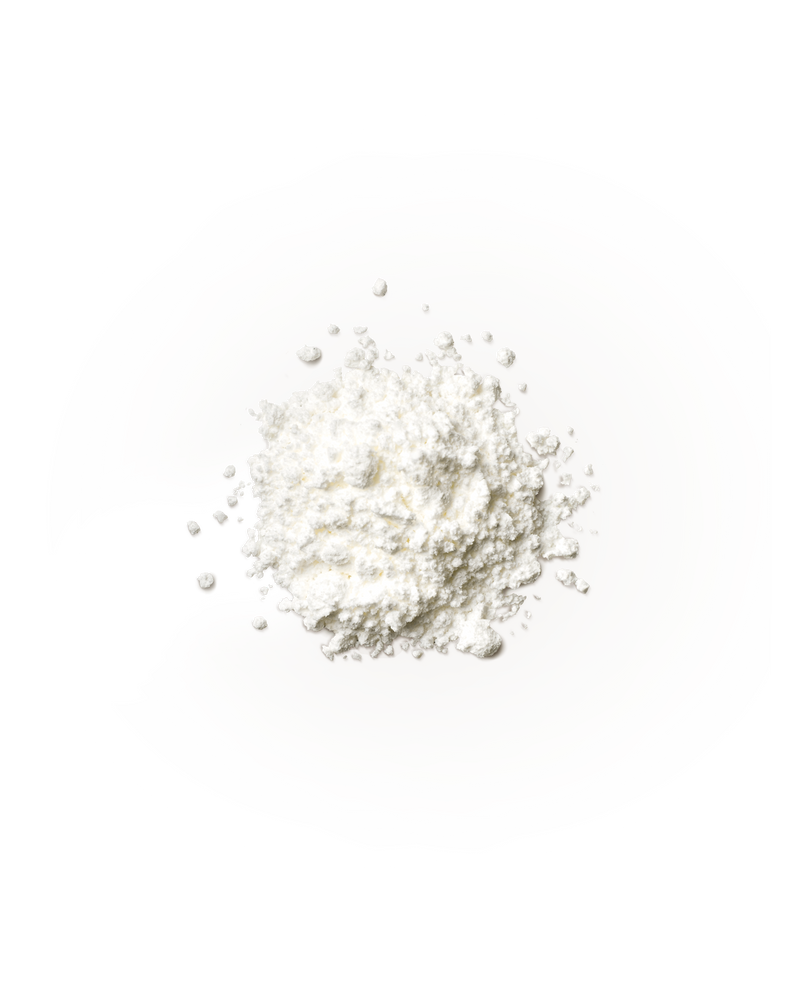
On the evidence published so far, no. The only trial that has measured hair directly found no difference between creatine and placebo after twelve weeks, across eight separate hair measures.[2] The worry traces back to one 2009 study of twenty rugby players that measured hormones in blood and never looked at anyone’s hair.[1]
Neither study answers the question for men who are already losing their hair. Neither one recorded family history, and that is the single biggest gap in what we can tell you.
Promix sells creatine, so we have an interest in how this comes out. The strongest study on this question also has supplement industry ties, and we set them out in full in section 07 rather than leaving you to find them.
On the published evidence, creatine has not been shown to cause hair loss.
One trial has measured hair directly. It ran for twelve weeks, gave one group 5 g of creatine monohydrate a day and the other a matched placebo, and checked hair at the crown with a trichogram and a FotoFinder imaging system, read by board-certified dermatologists. It found no difference between the groups on hair count, hair density, growth-phase percentage, resting-phase percentage, follicular units, terminal hair rate, vellus hair rate, or cumulative thickness.[2]
That is one study of 37 men. It is the best evidence there is, and it is still one study of 37 men. We are not going to tell you the question is closed.
We sell creatine monohydrate, which is the form and the dose that trial used, so read the rest of this knowing that. The fear itself has a specific source, and it is worth knowing what that source actually did.
It comes from one study, published in 2009, that measured hormones in twenty rugby players.
Researchers at a rugby institute in South Africa gave twenty college-aged players creatine or a placebo during their competitive season, then swapped the groups after a six-week washout. They drew blood at the start, at seven days and at twenty-one days.[1]
Testosterone did not change. DHT rose 56 percent after the seven-day loading phase and was still 40 percent above baseline two weeks later. The ratio of DHT to testosterone rose 36 percent, then settled 22 percent above where it started.[1]
Those numbers are real and the study is a good one. Double-blind, placebo-controlled, crossover with a washout is a solid design. What it did not do is look at anybody’s hair. The paper lists its outcome measures plainly: serum testosterone, serum DHT, the ratio between them, and body composition. Hair is not among them.[1]
Percent change from baseline in the 2009 rugby study. Testosterone did not move; the ratio between the two rose 36 percent, then settled 22 percent above baseline. Hair was never among the outcomes.[1]
The authors were careful about it too. Their conclusion says creatine “may, in part” act through increased conversion of testosterone to DHT, and their note on clinical relevance says the long-term safety “cannot be guaranteed.” That is a paper asking for more research, not a paper announcing a side effect. The overreach happened in seventeen years of retelling, not in the study.[1]
DHT is a hormone made from testosterone, and it is genuinely involved in male pattern baldness.
The body converts testosterone into dihydrotestosterone using an enzyme called 5-alpha reductase. DHT binds to androgen receptors more strongly than testosterone does. In people who are genetically susceptible, it binds to receptors in hair follicles on the scalp and those follicles shrink over time. That is the accepted mechanism behind androgenetic alopecia, and the 2025 trial cites the dermatology literature for it rather than disputing it.[2]
So the chain of reasoning behind the worry is not silly. It goes: creatine raised DHT in one study, DHT is linked to pattern baldness, therefore creatine might cause baldness.
The weak link is the word therefore. A hormone moving inside a blood sample is not the same event as a follicle shrinking on a scalp, and until 2025 nobody had checked whether the first one produced the second.
Sixteen years later, a trial finally measured the thing everybody was actually worried about.
In 2025, researchers ran a twelve-week randomized controlled trial in resistance-trained men aged 18 to 40. Forty-five were recruited and thirty-eight finished, nineteen in each group. One of those thirty-eight had incomplete hair data, so every hair result on this page rests on thirty-seven men. One group took 5 g of creatine monohydrate a day, the other took 5 g of maltodextrin. Neither the participants nor the researchers analyzing the data knew who was in which group.[2]
They measured blood hormones, and they measured hair. No difference appeared between the groups on any hormone, and no difference appeared on any of the eight hair measures. Testosterone and free testosterone did shift over the twelve weeks, but they shifted in both groups equally, which means it was not the creatine.[2]
| Attribute | van der Merwe 2009 | Lak 2025 |
|---|---|---|
| Design | Double-blind, placebo-controlled crossover, six-week washout | Double-blind, randomized, placebo-controlled |
| Who | 20 college-aged rugby players, South Africa, in competitive season | 19 per group, resistance-trained men aged 18 to 40 |
| How long | 3 weeks | 12 weeks |
| Dose | 25 g a day for 7 days, then 5 g a day for 14 days | 5 g a day throughout, no loading phase |
| Measured hair? | No. Serum hormones and body composition only | Yes. Trichogram and FotoFinder at the vertex, read by board-certified dermatologists |
| What it found | Testosterone unchanged. DHT up 56 percent after loading, still 40 percent above baseline at 3 weeks. DHT to testosterone ratio up 36 percent, then 22 percent | No difference between creatine and placebo for DHT, testosterone, the DHT ratio, or any of eight hair measures |
Sources 1 and 2. The two trials disagree on hormones and only one of them looked at hair.
The two studies disagree about DHT, and the 2025 authors offer a plain explanation: their trial used no loading phase and ran four times longer. The 2009 spike appeared during a week of 25 g a day, which is five times the normal dose.[2]
One detail is worth holding on to. The protocol that trial tested is not an exotic one. Five grams a day of plain creatine monohydrate, one ingredient, no loading phase. That is a standard scoop of ordinary monohydrate, and it is what Promix Non-GMO Creatine is. The label is in section 08.[2]
There is one more thing in the record, and we cannot tell you what it says. A letter to the editor about the 2009 study was published in 2010, along with a reply from its authors. Both are behind a paywall with no abstract. We have not read either one.[3]
Three words get used interchangeably, and the studies measure them separately.
Shedding is hair leaving your head. Everyone sheds. A trichogram counts what proportion of your hairs are in the growing phase against the resting phase, and a shift toward resting means more shedding is coming.
Thinning is individual hairs getting finer. That shows up as a change in cumulative thickness or in the ratio of terminal hairs to vellus hairs, the short fine ones. You can thin without shedding more, and the mirror will show it before a hairbrush does.
Androgenetic alopecia, or male pattern baldness, is the progressive condition where follicles shrink under androgen exposure in a characteristic pattern. It is a diagnosis, not a description, and a dermatologist makes it.
The 2025 trial measured all three families of outcome and found nothing on any of them.[2] That is worth more than a single headline number, because a study that only counted hairs could miss thinning entirely.
This is the group the evidence does not cover, and we are not going to pretend otherwise.
The 2025 trial excluded anyone who had used finasteride or minoxidil, anyone who had a hair transplant, and anyone with a diagnosed scalp condition. It also did not record whether participants had a family history of hair loss. The authors name that as a limitation themselves, and they cite research reporting that men whose fathers lost their hair are about twice as likely to lose theirs.[2][4]
So the trial tells you about men who were not already losing their hair. If you are, the honest answer is that this study was not designed to answer your question, and no study we found was.
That is a question for a dermatologist, who can look at your scalp and your family history together. We are not going to tell you to start or stop anything.
Four things, and the last one is about who paid for the research.
It cannot tell you about women. The 2025 trial enrolled men only, because DHT is tied to male pattern baldness. The authors say female research is still needed.[2]
It cannot tell you about years. Twelve weeks is twelve weeks. Hair loss happens over decades, and the authors say a longer or higher-dose study could read differently.[2]
It cannot tell you about loading. The 2025 trial used no loading phase. The 2009 DHT spike happened during one. Nobody has run a long trial that includes a loading week.[1][2]
It cannot tell you what one unread letter says. Source 3 is a published comment on the 2009 study with a reply from its authors, and both are paywalled.[3]
The 2025 trial is the strongest evidence on this page, and it is not independent of the supplement industry. It was published in the Journal of the International Society of Sports Nutrition. The CEO and co-founder of that society is one of its authors. Two further authors hold paid advisory or consulting roles with supplement companies, and one has received creatine donations for research.[2]
The paper states that it received no funding. It also thanks the official representative of BPI Sports, the company that supplied the creatine used in the study. Both of those things are printed in the paper, and neither is hidden. They do mean we will not call this trial independent.[2]
One detail runs the other way. The creatine tested was BPI Sports, not ours. We have no connection to the trial and no product in it.
One ingredient, five grams a serving, and a lot code you can check yourself.
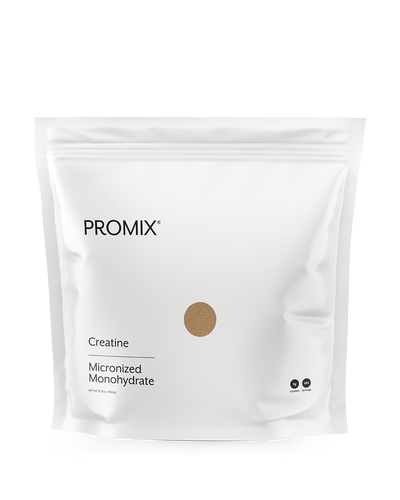
Promix Non-GMO Creatine is micronized creatine monohydrate and nothing else. One scoop is 5 grams, which is the dose the 2025 trial used. The label lists no other ingredients, no allergens, and no sweeteners.

One ingredient and 5 grams a serving, with no daily value established because none exists for creatine. Read from the live product page and verified September 22, 2026.
We would rather you did not take our word for any of this. Every bag carries a lot code, that code goes into a testing database, and the independent test results come back to you rather than to us.

More on what third-party testing does and does not prove is in our guide to third-party testing.
One ingredient, five grams
Unsweetened, smooth and flavorless. Safely supports increases in muscular size, strength and power.¹
If you want the comparison between forms, we wrote that up separately in creatine HCl versus monohydrate. If weight is the worry instead, that is in does creatine make you gain weight, and when in the day to take it is in when to take creatine.
One 2009 study in twenty rugby players found DHT rose 56 percent during a week of high-dose loading and stayed 40 percent above baseline for two more weeks. A 2025 twelve-week trial using 5 grams a day with no loading phase found no difference in DHT between creatine and placebo. The two studies used very different doses, and nobody has run a long trial that includes a loading week.
Not in the one trial that has measured it. A 2025 randomized controlled trial checked hair count, density and the proportion of hairs in the growing and resting phases after twelve weeks and found no difference between creatine and placebo. That is thirty-seven men over twelve weeks, so it is the best answer available rather than the final one.
No published study has shown creatine causing hair loss at any speed. The 2025 trial measured hair at baseline and at twelve weeks and found no change attributable to creatine. Anyone quoting you a timeline is going beyond what has been measured.
Creatine monohydrate is the form used in both studies discussed here. The 2009 study used monohydrate and measured hormones. The 2025 trial used monohydrate and measured hair. Neither found evidence that it causes hair loss, and only the second one looked.
Male pattern baldness is driven by genetics and androgen sensitivity over years. The 2025 trial found no effect on hormones or hair over twelve weeks, but it did not record family history and it did not follow anyone for years. It cannot rule out an effect in men who are already predisposed.
The 2025 trial enrolled men only, aged 18 to 40 and resistance trained, and found no effect on any hair measure. Men who were already using hair loss medication or who had a diagnosed scalp condition were excluded, so the result applies to men who were not already losing hair.
We do not know. The 2025 trial enrolled men only, because DHT is tied to male pattern baldness, and its authors say research in women is still needed. No trial we found has measured this in women.
There is no published evidence that creatine causes hair loss in the first place, so there is nothing to reverse and nothing has been measured. If you are losing hair and want to know why, that is a question for a dermatologist rather than for a supplement label.
van der Merwe J, Brooks NE, Myburgh KH. Three weeks of creatine monohydrate supplementation affects dihydrotestosterone to testosterone ratio in college-aged rugby players. Clin J Sport Med. 2009;19(5):399–404. doi:10.1097/JSM.0b013e3181b8b52f
Paywalled. We read the publisher abstract, not the full text. No funding or conflict statement is shown there. Every figure we quote from this study comes from that abstract.
Lak M, et al. Does creatine cause hair loss? A 12-week randomized controlled trial. J Int Soc Sports Nutr. 2025;22(sup1):2495229. doi:10.1080/15502783.2025.2495229
Open access, read in full. Published in the journal of the International Society of Sports Nutrition, whose CEO and co-founder is an author. Two further authors hold paid advisory or consulting roles with supplement companies. The study product was BPI Sports creatine, and the paper declares no funding while thanking BPI’s official representative. See section 07.
Green G. Creatine supplementation and DHT:T ratio in male rugby players. Letter to the editor. Clin J Sport Med. 2010;20(3):220, author reply 220–222. doi:10.1097/JSM.0b013e3181df5cad
We have not read this. It is a published comment on source 1 with a reply from that study’s authors. Both are paywalled with no abstract. We are listing it so you know it exists.
Chumlea WC, Rhodes T, Girman CJ, et al. Family history and risk of hair loss. Dermatology. 2004;209(1):33–39. doi:10.1159/000078584
We have not read this either. We name it because source 2 cites it for the family-history figure in section 06, and we would rather point you at the original than hide it behind a summary.
Promix product facts read from the live product page and verified 2026-09-22. This article is education, not medical advice. If you are losing your hair, speak to a dermatologist.


Detox Flush contains Niacin and WILL cause flushing and tingling. This is NORMAL.
DO NOT purchase Detox Flush if you are not comfortable with flushing and tingling.
DO NOT take a full serving your first time using Detox Flush. Take a 1/4 serving to understand how the tingling and flushing will feel.
For use ONLY by healthy individuals over 18 years old. Do not take if you are pregnant or nursing.