


































When to Take Creatine: Before or After Your Workout?
The most cited study on this says take it after. Its own statistics say otherwise. Here is what holds up, and what Promix prints on the bag.
The most cited study on this says take it after. Its own statistics say otherwise. Here is what holds up, and what Promix prints on the bag.
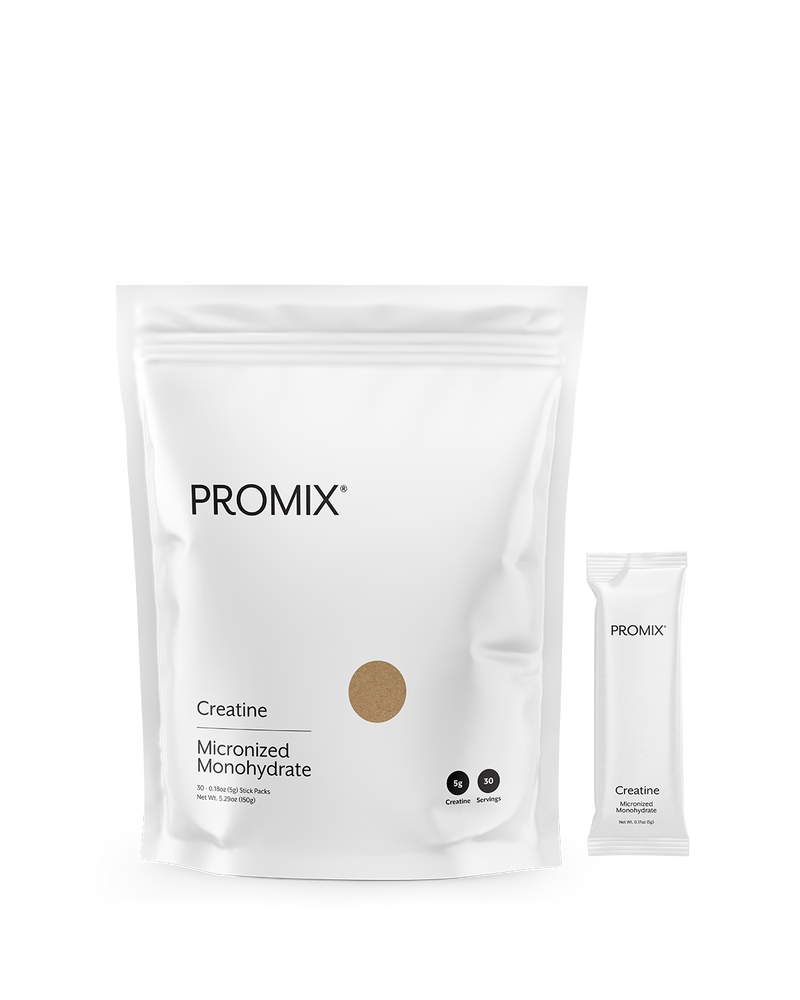
Take 5 grams every day at whatever time you will actually remember, including rest days. Promix says it on its own label: timing does not impact results. The evidence agrees.
Take it every day, at whatever time you will actually remember. That is the whole answer, and Promix prints it on its own product page.
The How to Use panel on Promix Non-GMO Creatine reads: “Use: Once every 24 hours with a shake or meal containing carbohydrates. Timing does not impact results.” Verified in the page source on September 15, 2026.
That is unusual. Most brands selling creatine sell a protocol with it. Promix does not, and the evidence is on their side.
The reason is how creatine works. It is not a stimulant that acts in the hour after you swallow it. It accumulates in muscle over days until the stores are full, and then it stays full while you keep taking it. What matters is that you take it, and that you keep taking it. When you take it is a detail.
The rest of this page works through the timing questions people actually search for, and says plainly which of them have real answers and which do not.
Either. The trial that gets cited for taking it after your workout did not find a significant difference, and the study that looked hardest at the question found none at all.
This is the question the whole category argues about, so it is worth being precise about what the evidence says.
| Study | Design | What it found |
|---|---|---|
| Antonio and Ciccone, 2013 | 19 male recreational bodybuilders, 4 weeks, 5 g immediately before or immediately after training. No placebo group | No significant interaction. Both groups gained. The “post-workout is superior” conclusion came from magnitude-based inference, not from the ANOVA |
| Dinan and colleagues, 2022 | 34 collegiate athletes, 8 weeks, randomized, double-blind, placebo-controlled. 5 g before, after, or placebo | No group by time interaction on lean mass (p=0.11) or back squat strength (p=0.87). Authors: the timing “did not exert any additional influence over the measured outcomes” |
| Ribeiro and colleagues, 2021 | Review of five timing studies | “Adapting Cr timing specifically, according to when training is performed, is not currently supported by solid evidence and should not be considered a real concern for now.” |
Read at the publisher on September 15, 2026. Full citations in the Sources list below.
The post-workout group gained 2.0 kg of fat-free mass, about 4.4 lb, against 0.9 kg, about 2 lb, for the pre-workout group. This is the line that reached every supplement blog on the first page of Google.
Conclusion drawn by magnitude-based inference
The analysis of variance found no significant interaction between group and time. Both groups improved. The absolute gaps were small with overlapping confidence intervals, there was no placebo group, and nobody measured muscle creatine.
Magnitude-based inference has since come under substantial criticism
The 2013 study deserves a closer look, because it is the one everyone quotes. Nineteen men completed it over four weeks. The conclusion that post-workout is better did not come from the analysis of variance at all. It came from a separate method called magnitude-based inference, which returned “possibly more beneficial”.
That method has since come under substantial criticism. Sainani published a direct critique in Medicine and Science in Sports and Exercise in 2018, and a second paper in 2019 arguing it is not Bayesian and is not a valid method of inference. The 2021 Nutrients review makes the same point about this exact study, noting the absolute differences were small with overlapping confidence intervals, that there was no placebo group, and that nobody measured muscle creatine.
In fairness, that argument has two sides. The people who developed magnitude-based inference published a defense of it, titled The Vindication of Magnitude-Based Inference, in 2018. It appeared in Sportscience, a journal one of those authors edits. We are telling you the debate exists rather than pretending the question is closed. What is not in dispute is narrower and is enough: the 2013 study's own analysis of variance found no significant difference between taking creatine before and after training.
The authors of the 2013 study were straightforward about its limits. Small sample, four weeks, and between 16 and 21 percent of participants were non-responders for strength and fat-free mass.
Promix compares creatine forms rather than timing protocols in creatine HCl versus monohydrate, which is the other question people ask at this point.
Yes, and there is no reason not to. Bedtime is no worse than any other hour, because the benefit comes from keeping muscle stores full rather than from a dose landing near your session.
If the post-workout window does not hold up, then neither does the idea that any particular hour is wrong. Creatine before bed is fine.
The practical case for it is adherence. A dose attached to something you do every single night is a dose you are unlikely to miss, and missing doses is the only failure mode that clearly matters here.
Protein before bed is a genuinely different question, because there the timing evidence points somewhere. Promix covers it in casein versus whey before bed.
Yes. Promix's directions say once every 24 hours, with no exception for days you do not train.
This follows from the same mechanism. Creatine works by saturating muscle stores and holding them there. Stores do not know what day of the week it is, and they fall back toward baseline if you stop feeding them.
The dose does not change on a rest day, because the muscle store does not know what day it is.
Dose and schedule from Promix's own How to Use panel, read from promixnutrition.com on September 15, 2026. The training pattern is an example only.
The International Society of Sports Nutrition position stand describes maintenance as 3 to 5 grams a day, as a daily figure rather than a per-session one.
There is one honest caveat. The 2017 position stand gives no specific guidance on rest days, and the timing studies were not designed to answer it. The daily recommendation follows from the saturation mechanism and from what the brand prints on the bag, not from a trial that tested five days a week against seven.
An empty stomach is not a problem. Food may be slightly better, and Promix's own directions suggest it.
Promix says to take it “with a shake or meal containing carbohydrates”. The reasoning is real. The International Society of Sports Nutrition position stand states that “ingesting creatine with carbohydrate or carbohydrate and protein have been reported to more consistently promote greater creatine retention”.
Read that carefully. It says more consistently, not dramatically more. This is a refinement, not a requirement. If the only time you will reliably take creatine is on an empty stomach first thing, take it on an empty stomach first thing.
The proposed mechanism is that carbohydrate raises insulin, and insulin stimulates the creatine transporter. The 2021 review is blunt that this remains theory: it says physiological and mechanistic data are lacking.
Not the timing. What a different form can change is whether you take it at all, which on this topic is the variable that matters.
Every timing answer above assumes creatine monohydrate powder mixed into a drink. Promix sells a second form, and it is worth being precise about what is different and what is not.
Liposomal Creatine is a liquid. One packet is 30 milliliters, there are 15 packets per pouch, and the Supplement Facts panel lists 5 grams of micronized creatine monohydrate. That is the same 5 grams as one scoop of the powder. The suggested use on the panel reads: “Take one packet daily, either directly, mixed with a beverage, or as directed by your healthcare provider.”
What Promix claims for it, in Promix's own words: “Enhanced absorption and easier digestion”, and “Liposomal encapsulation of micronized creatine enhances bioavailability and promotes digestive comfort.”
What we can tell you about that claim: there is no published human trial of liposomal creatine. We searched the peer-reviewed literature on September 15, 2026 and found none. Every source making the absorption case for liposomal creatine is a supplement brand or a company selling the raw liposomal ingredient. So the claim above is Promix's, presented as theirs, and it is not something this page can confirm or deny for you.
One thing about it is not a claim. Each packet carries 25 grams of carbohydrate and 1 gram of protein alongside the creatine. That is the co-ingestion the position stand describes as promoting greater creatine retention, delivered without you having to plan a meal around it. It is also 140 calories and 2 grams of added sugar, which is a real cost if you are tracking either, and it contains almonds.
And the price is not close. The 180-serving powder is $59, which works out at about 33 cents a serving, or 30 cents on Promix's subscription. Liposomal Creatine is $39 for 15 packets, which is $2.60 a serving. Roughly eight times as much for the same 5 grams of creatine.
Which is worth it depends on one thing, and it is not absorption. If a packet you can take without water, a scoop or a shaker is the difference between taking creatine daily and not, the daily habit is worth more than any timing decision on this page. If you already take the powder every day, the powder is doing the job.
Same 5 grams. No scoop, no shaker, no water. Contains almonds.
See Liposomal Creatine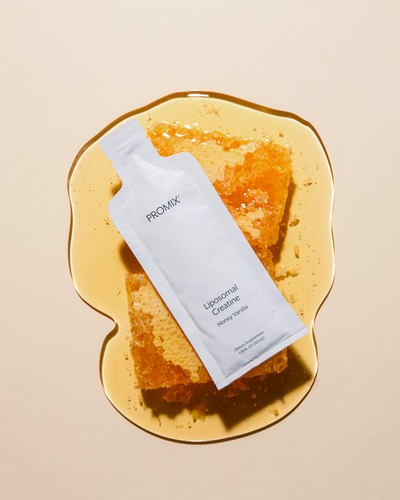
No. Loading is faster, not better. Both routes end with the same muscle creatine stores.
The International Society of Sports Nutrition position stand gives both protocols and is clear about the difference between them.
| Protocol | Dose | Time to saturation |
|---|---|---|
| Loading | 5 g four times daily, or about 0.3 g per kg of body weight, about 0.14 g per lb | 5 to 7 days |
| No loading | 3 g daily | About 28 days |
| Maintenance, either route | 3 to 5 g daily | Ongoing, for as long as you keep taking it |
International Society of Sports Nutrition position stand, 2017. Checked on September 15, 2026 and it remains the current stand.
Loading means taking 20 grams a day in four doses for up to a week, which is the part some people find hard on their stomach. If that describes you, the 28-day route reaches the same place. A loading week is also where the hair loss worry started: the 2009 study behind it found DHT rose during one, and never looked at hair. We went through it in does creatine cause hair loss.
Three to five grams a day once your stores are full. One scoop of Promix Non-GMO Creatine is 5 grams.
This is the number that matters on this page, and it matters more than any timing decision above it.
The Supplement Facts panel on Promix Non-GMO Creatine lists a serving size of 1 scoop, 5 grams, of creatine monohydrate, with 180 servings per container. The product page adds its own caveat: “Dosage will vary based upon your lean mass and diet.”

The full panel, read from promixnutrition.com on September 15, 2026.
On safety, the position stand is direct: short and long-term supplementation, up to 30 grams a day for five years, is described as safe and well tolerated in healthy individuals across populations from infants to the elderly. If you have a medical condition or take medication, that is a conversation with your doctor rather than with a blog post.
Five to seven days with a loading phase, about 28 days without one. Nothing useful happens on day one.
This is where the timing question really lives. People ask when to take creatine because they want it to work sooner. The honest answer is that the unit of time is weeks, not hours.
Both routes finish in the same place. One gets there in a week, the other in about a month.
Illustrative shape only. The two protocols and their timeframes are from the International Society of Sports Nutrition position stand, 2017. The curves are drawn to show the difference in shape, not plotted from measured data, and no study cited on this page measured muscle creatine directly.
Anything you feel in the first few days is not the creatine. Muscle stores are still filling. If the scale moves in that first week, that is a different question, and we answered it in does creatine make you gain weight. Shifting a dose from morning to evening changes nothing about that schedule.
It also runs in reverse. Stores stay elevated only while you keep taking it, which is the real argument for a daily habit over a clever protocol.
Six steps, built from Promix's own directions and the International Society of Sports Nutrition position stand.
Three to five grams a day maintains saturated muscle stores. One scoop of Promix Non-GMO Creatine is 5 grams. Promix notes dosage will vary based upon your lean mass and diet.
Loading is faster, not better. Five grams four times a day for five to seven days fills stores quickly. Three grams a day gets there in about 28 days. Both end in the same place.
Before training, after training, with breakfast or before bed. The evidence does not separate them, and Promix's label says timing does not impact results. Consistency is the variable that actually moves.
Promix suggests a shake or a meal containing carbohydrates. Co-ingestion with carbohydrate has been reported to promote greater creatine retention. If it is not easy, take it anyway.
Add 8 to 12 fluid ounces of water or other liquid. Shake, stir or blend for about 30 seconds until dissolved. It may be combined with pre-workout or protein.
Once every 24 hours. Stores stay topped up only while you keep taking it, which is why the schedule is daily rather than tied to your training calendar.

The 30-stick box is the same monohydrate as the 180-serving pouch, pre-measured.
Shop Non-GMO CreatineOn a habit you are trying not to miss, that is the whole argument for it.
The timing studies have a shared blind spot, and the most useful review on the subject was co-authored by people with ties to a creatine manufacturer. Both are worth knowing.
The disclosure that belongs here. The 2021 Nutrients review is the most directly useful source on this page. One of its senior authors sits on the scientific advisory board of AlzChem, a company that manufactures creatine, and has received research grants, creatine donations, travel support and speaking honoraria from it. A second author previously received free creatine from the same company. The review states AlzChem had no input into its content.
We are telling you because you should be able to weigh it yourself. It is also worth noting which way it points: those authors concluded that timing does not matter, which is a conclusion against the commercial interest of a company that sells creatine, not for it. The 2022 trial that reached the same conclusion declared no commercial relationships at all.
Two products, the same 5 grams of creatine monohydrate, very different in everything else.
| Attribute | Non-GMO Creatine | Liposomal Creatine |
|---|---|---|
| Creatine monohydrate | 5 g | 5 g |
| Form | Powder, 1 scoop | Liquid, 1 packet (30 ml) |
| Servings per container | 180, 90, or 30 single sticks | 15 |
| Calories | Not listed on panel | 140 |
| Carbohydrate | Not listed on panel | 25 g, including 2 g added sugars |
| Allergens | None listed | Contains almonds |
| Price per serving | About $0.33 at 180 servings for $59 | $2.60 at 15 packets for $39 |
Prices and panels read from promixnutrition.com on September 15, 2026 and may change.
The same 5 grams of creatine monohydrate. Everything else on the panel is what differs.

Panel read from promixnutrition.com on September 15, 2026. The Supplement Facts box is Promix's own image; the lines beside it are transcribed from the same panel.
Promix publishes third-party testing for both. If you want the method for checking that on any brand, not just this one, it is in how to check if a supplement is third-party tested.
Either. A 2022 randomized controlled trial in 34 collegiate athletes gave 5 grams before training, after training, or placebo for eight weeks and found no group by time interaction on lean mass or strength. The authors wrote that the timing of creatine monohydrate did not exert any additional influence over the measured outcomes. Promix says the same thing on its own label: timing does not impact results.
Five to seven days if you load, about 28 days if you do not. The International Society of Sports Nutrition says 5 grams four times a day for five to seven days saturates muscle stores, and that 3 grams a day gets to a similar place over roughly 28 days. After that you are maintaining, not building up.
Three to five grams a day once your muscle stores are full, according to the International Society of Sports Nutrition. Promix Non-GMO Creatine is one 5 gram scoop, and the product page notes that dosage will vary based upon your lean mass and diet.
Yes. Nothing in the evidence makes bedtime worse than any other hour, because the effect comes from keeping muscle creatine stores topped up rather than from a dose landing near your training session. If bedtime is the time you will actually remember, that is the right time.
Yes. Promix's own directions say once every 24 hours, with no exception for days you do not train. Creatine works by saturating muscle stores and holding them there, so the schedule is daily rather than tied to a session.
You can. Promix suggests taking it with a shake or meal containing carbohydrates instead, and the International Society of Sports Nutrition reports that ingesting creatine with carbohydrate, or with carbohydrate and protein, has been reported to more consistently promote greater creatine retention. An empty stomach is not a problem. Food may simply be slightly better.
Nothing shows that coffee stops creatine getting into muscle. In a 1996 crossover study of nine men, muscle phosphocreatine rose about 4 to 6 percent whether or not caffeine was taken, though the performance benefit disappeared in the caffeine condition. That study used roughly eight times a standard creatine serving and about 400 milligrams of caffeine a day. Promix says 8 to 12 fluid ounces of water or other liquid, so coffee is within its own directions.
Water, a shake, or any liquid you will finish. Promix's directions say 8 to 12 fluid ounces of water or other liquid, that it may be combined with pre-workout or protein, and to shake, stir or blend for about 30 seconds until dissolved.
Every figure on this page is read from Promix's own product pages or from a named study, with the date it was checked.


Detox Flush contains Niacin and WILL cause flushing and tingling. This is NORMAL.
DO NOT purchase Detox Flush if you are not comfortable with flushing and tingling.
DO NOT take a full serving your first time using Detox Flush. Take a 1/4 serving to understand how the tingling and flushing will feel.
For use ONLY by healthy individuals over 18 years old. Do not take if you are pregnant or nursing.